






Customize your chart below 👇
1Who's this chart for?
2How old is your child?
This picks starting steps. Change anything below.
3Your steps
Drag to change the order. Tap a picture to swap it.
More ideas
4Pick a look
Share what you made with your friends 💛
Email me the PDF 📬
We'll email you the PDF plus occasional parenting tips. Unsubscribe anytime.
Ready-made after school routine charts to print
Start from one of these, then change anything you like.
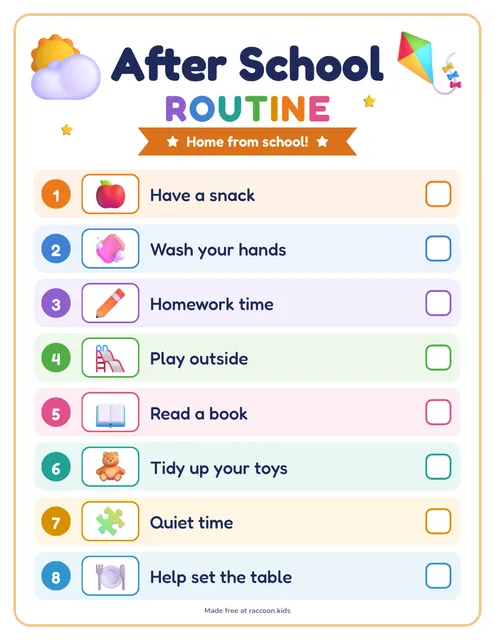 After school checklistSnack, homework, play and tidy up, ages 6 to 8Use this one
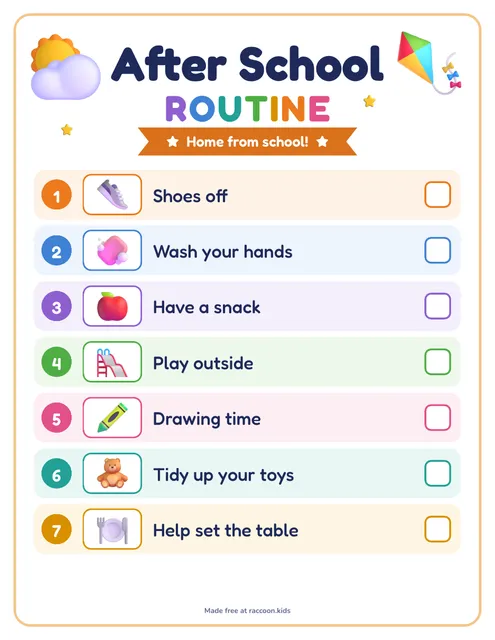 After school routine for preschoolersSeven picture steps for ages 4 to 5Use this one
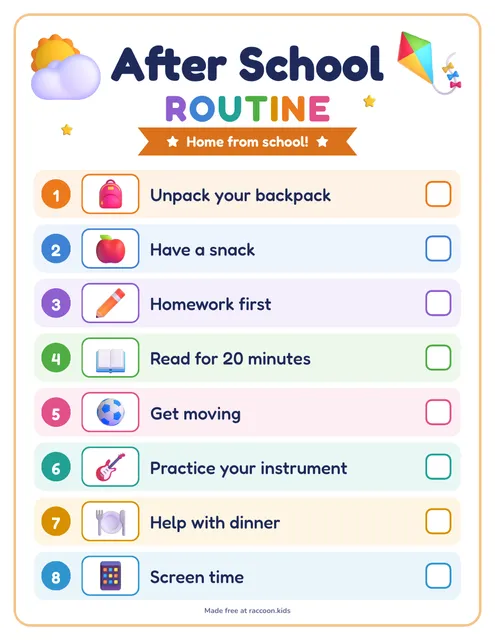 Homework routine for big kidsHomework first, then the fun, ages 9 and upUse this one
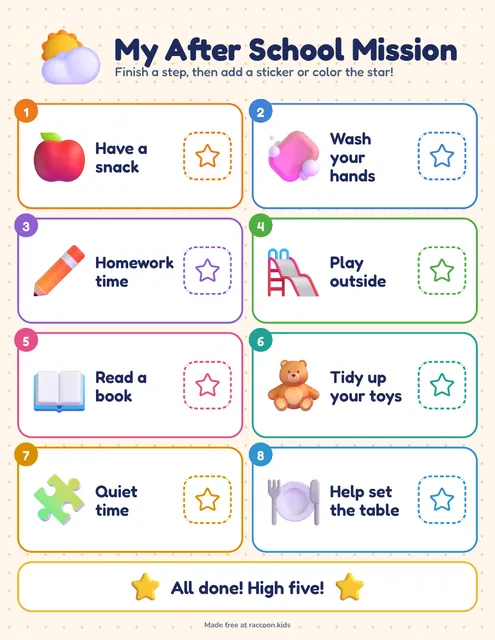 After school game boardSticker spots from snack to dinner, ages 6 to 8Use this one
How to make an after school checklist
- Start with a name and an age. The age loads a starting list: a calm landing for 2 to 3, plenty of play for 4 to 5, snack, homework and play for 6 to 8, and a homework-first list for 9 and up.
- Fit it to your afternoons. Swap "Play outside" for soccer practice, add "Feed the dog", move homework before or after the snack. Every step and every picture can change.
- Print one page. Choose checklist rows or the game board, then download the PDF on A4 or Letter. Up to 12 steps fit on the page, and it costs nothing.
A printed after school checklist settles the same questions every day ("Can I play now?" "Do I have to do homework?") before anyone asks them. The chart answers, so you don't have to.
A homework routine that starts with a snack
Most kids come through the door hungry, tired and full of the day. An afternoon routine works best when it respects that: food first, a short break, then homework, then the free time they've been waiting for.
- Snack before homework. A hungry child and a math worksheet is a losing match. Ten minutes and an apple change the whole afternoon.
- Same spot, same time. A homework routine sticks when it happens at the same table at about the same time each day, so "Homework time" on the chart means something specific.
- Small pieces for small kids. For a 6-year-old, "Read for 10 minutes" is a clearer step than "Homework". Older kids can handle one homework block.
- Fun after the work. Put screen time or the park at the bottom of the chart. "First homework, then screens" is easier to keep when it's printed than when it's argued.
After school routine ideas by age
These are the starting steps the maker suggests. Change any of them in the steps list above, or pick from the ideas under it.
- Ages 2 to 3: Home time, wash your hands, have a snack, play outside, tidy up your toys and quiet time.
- Ages 4 to 5: Shoes off, wash your hands, have a snack, play outside, drawing time, tidy up your toys and help set the table.
- Ages 6 to 8: Have a snack, wash your hands, homework time, play outside, read a book, tidy up your toys, quiet time and help set the table.
- Ages 9 and up: Unpack your backpack, have a snack, homework first, read for 20 minutes, get moving, practice your instrument, help with dinner and screen time.
If chores are the sticking point, the chore chart maker spreads them over the week, and our guide to screen time rewards for kids covers the "screens after homework" deal. The afternoon sits between two other routines: make a morning routine chart and a bedtime routine chart to match.